
You saw it in a photo before the mirror: the apple of the cheek has slipped, the cheekbone looks flatter, and the fold from nose to mouth has deepened. The face reads tired and dragged down, while the jawline is still holding. The mid-face has slid, for one of three reasons: the cheek pad has dropped, the skin over it has gone slack, or the cheekbone has flattened. Threads carry the cheek back up and out, and you watch it happen. Sofwave™ firms the skin. Filler is structure, only where it changes the result. Dr Nish Shah MD does all three and points to which yours is.
1 · Lifts — PDO Midface Threads
– The apple of the cheek has slipped off the bone
– Carried back up and out as the threads go in
– Holds 12–18 months
2 · Tightens — Sofwave™
– The pad is in place; the skin over it has gone slack
– One visit, straight back to your day
– Firmer from 12 weeks, still improving at 6 months
3 · Restores — Cheek Filler
– The cheekbone itself has flattened
– Structure, only where it changes the result
– Deep on the bone and reversible
Slid, slackened or flattened? Dr Nish points to which in the mirror, then names one treatment, two staged, or all three.
Photo first, mirror second. Dr Nish looks at the cheek in profile and in a smile, then shows you what has slid and what has slackened
Carried back up and out while you watch. Midface threads put the apple of the cheek back where it sat; you see it before you leave
Filler as structure only. Deep on the cheekbone, reversible, and never added to a pad that has already slid
Surgery named when it is the answer. Where skin excess is significant, Dr Nish says a facelift may do more, and refers you
Teaches this to other doctors. Senior International Clinical Trainer for midface threads and structural filler; official certified Sofwave™ practitioner and partner
No cuts, no general anaesthetic. Sofwave™ and filler: back to your day. Threads: back the next


Dr Nish Shah MD · Medical Director
Non-Surgical Skin Rejuvenation Specialist · Official certified Sofwave™ practitioner and partner · Senior International Clinical Trainer · Mayfair & Marylebone

Thousands of PDO Thread Lifts
Brand Ambassador & Key Opinion Leader for PDO threads and dermal fillers. He teaches midface threads and cheek filler to other doctors at Derma Medical.

Official certified Sofwave™ practitioner and partner
Certified by Sofwave™. Dr Nish maps and performs every session himself.

Senior International Clinical Trainer — Derma Medical
One of the UK’s largest aesthetics training academies. Dr Nish teaches thread lifting and structural filler to other doctors.

Location
58 South Molton Street, Mayfair, London W1K 5SL · 3 min from Bond Street station, serving Mayfair and Marylebone
CHEEK RESULTS
Before & After Results
Every result below was achieved at Medisha Clinic by Dr Nish Shah personally. Photographs are unedited and taken in the same lighting. Results are individual and may vary.
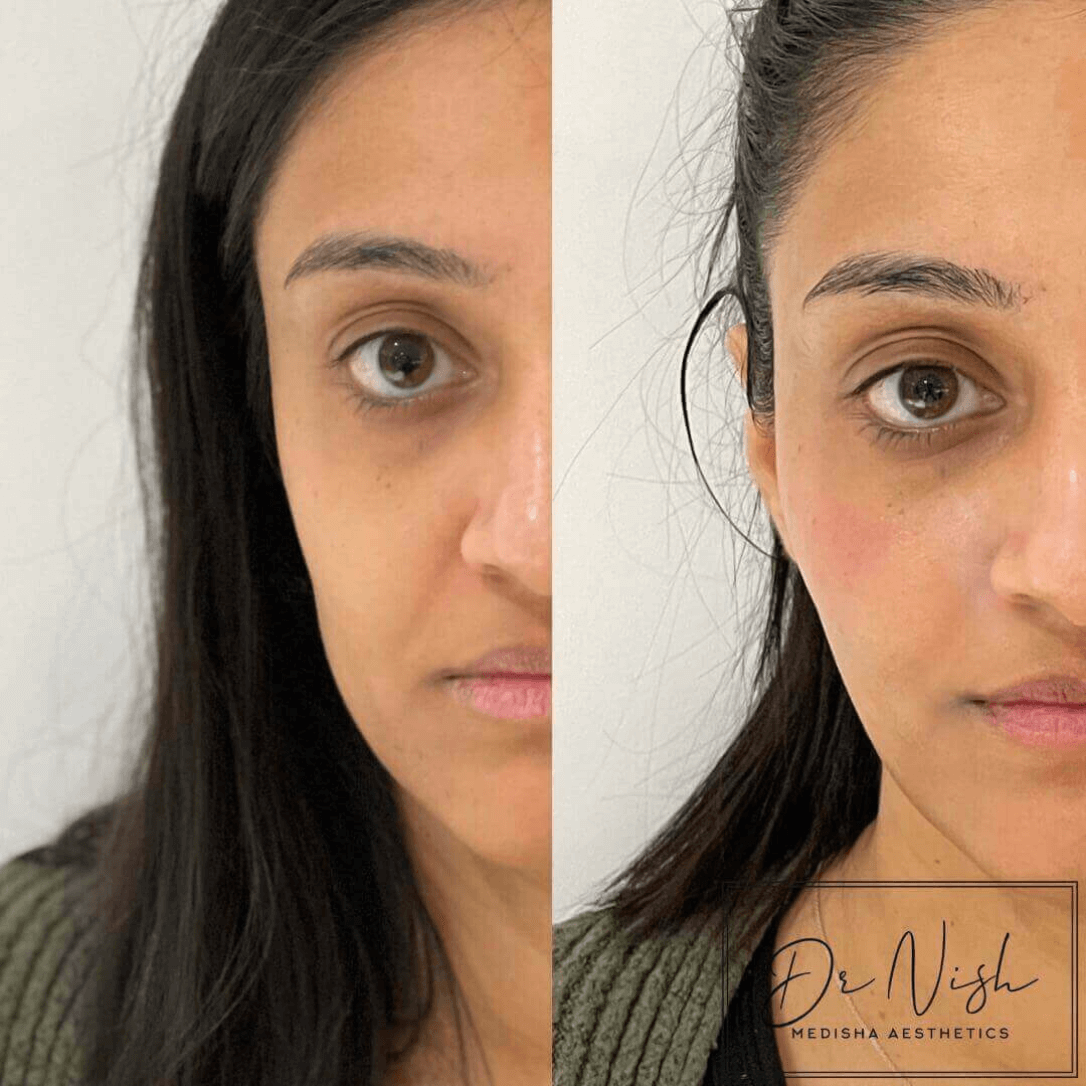
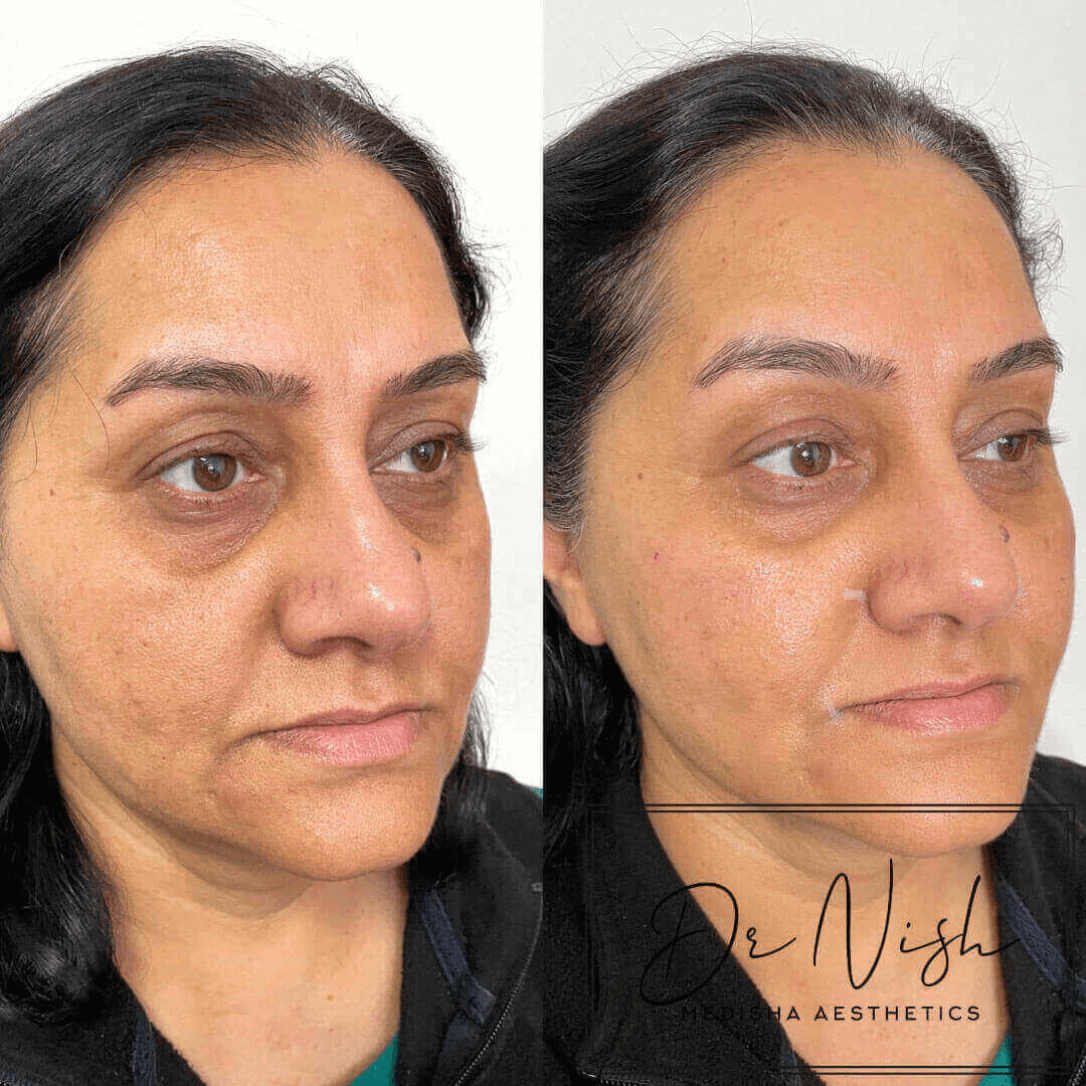
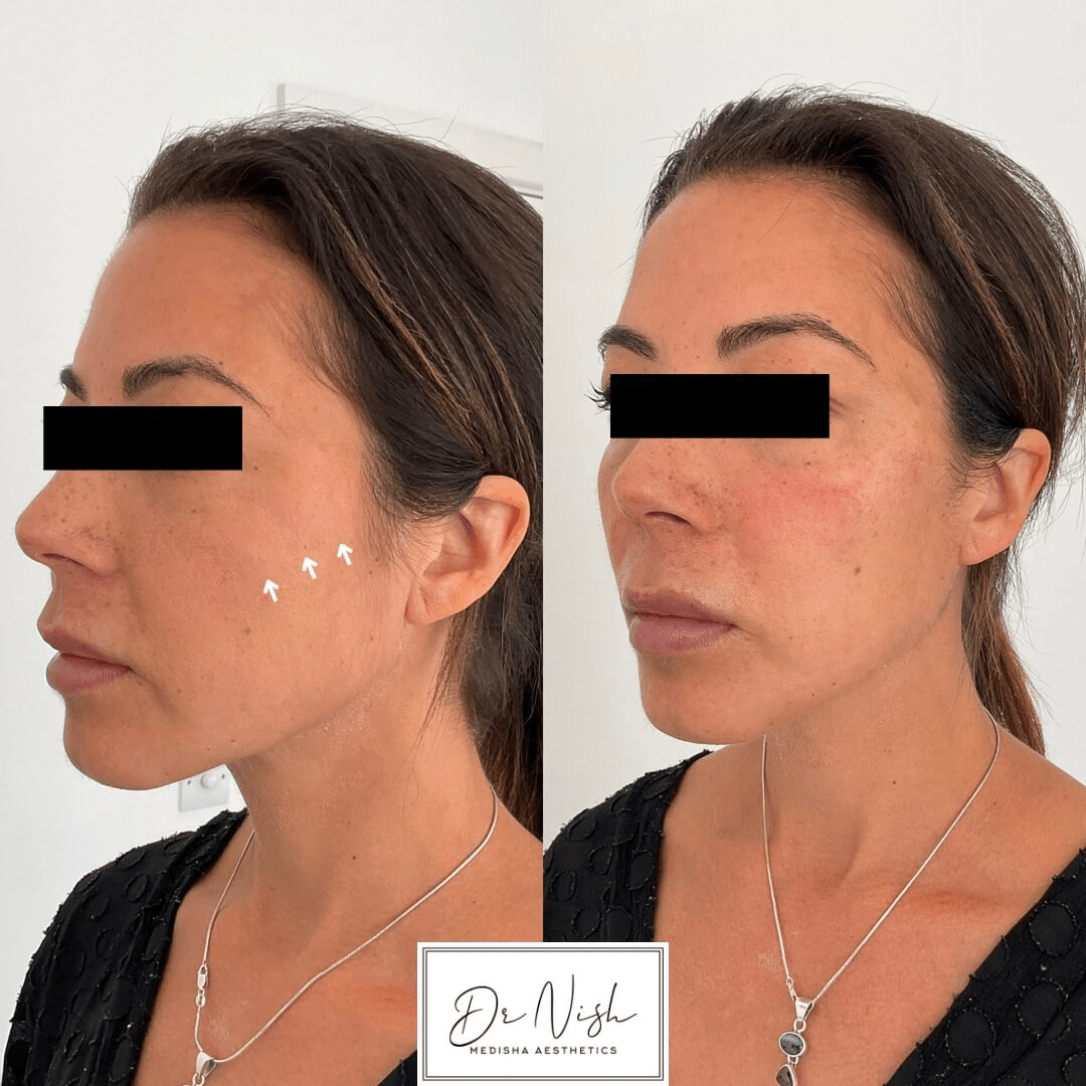
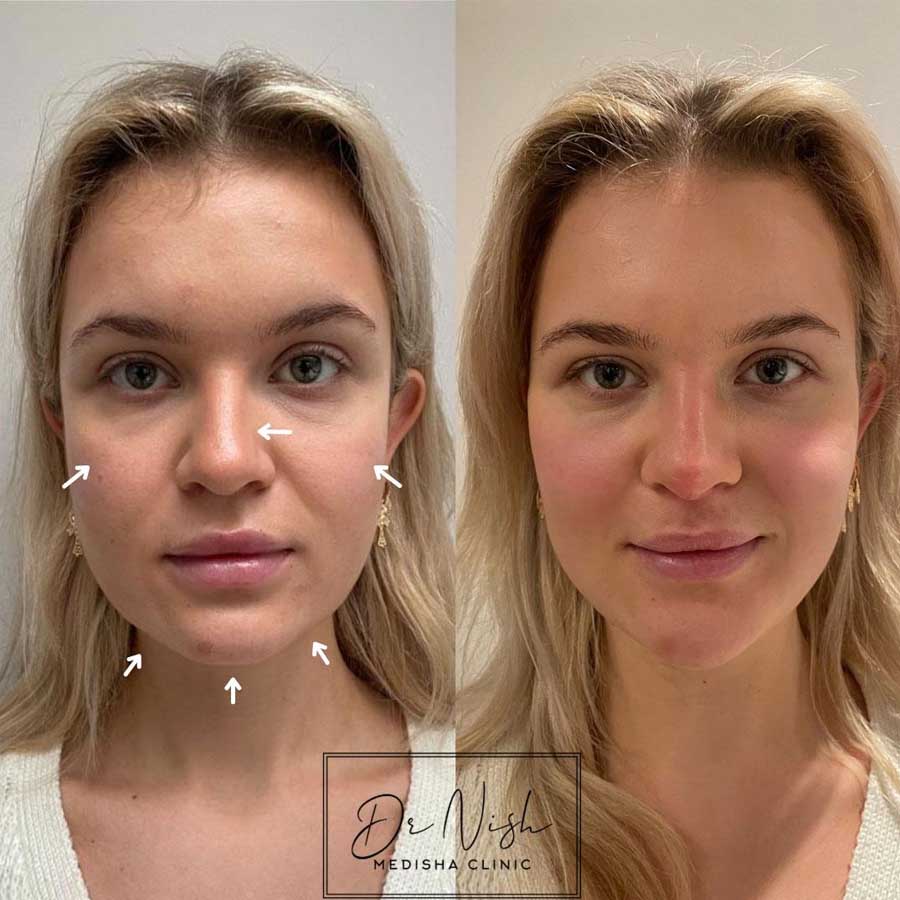
*Individual results may vary. All treatments performed by Dr Nish Shah MD at Medisha Clinic, Mayfair, London.
The Treatment
Why Are My Cheeks Sagging?
The apple of the cheek is a pad of fat resting on the cheekbone. Ligaments hold it up; skin covers it. Any of the three can give way. Ligaments loosen and the pad slides down and in: that is descent, and the fold from nose to mouth deepens beneath it. Skin loses collagen and goes slack over a pad that has not moved: laxity. Bone and pad shrink and the cheekbone flattens: deflation.
From the front, all three read as a tired face. Side-on, in a photo, they look different, and they need opposite treatments. Volume on a pad that has slid makes the mid-face heavier and the fold deeper. Threads through a cheek that has merely flattened lift nothing. Firming the skin alone cannot carry a pad back onto the bone.
Dr Nish looks at your cheek in profile, at rest and in a smile, and shows you in the mirror which of the three it is. Then he names it: threads, Sofwave™, filler as structure, or two of them at separate visits. And if there is more skin than any of these can take up, he says a facelift may do what they cannot, and refers you.
THREE CAUSES, THREE ANSWERS
Slid. Slackened. Flattened.
What Has Your Mid-Face Done?
Each treatment answers one cause. Because Dr Nish performs all of them, the diagnosis chooses the treatment, not the other way round.
- Slid → PDO midface threads. The apple of the cheek sits below the bone; the nose-to-mouth fold has deepened under it. Dissolvable 720 Dimension COG threads carry the pad back up and out, on the day. Holds 12–18 months, and the threads leave collagen behind.
- Slackened → Sofwave™. The pad has not moved, but the skin over it has gone soft and looks crepey in a photo. FDA-cleared ultrasound firms it in one visit, nothing to recover from. Change shows at 12 weeks and builds to 6 months.
- Flattened → filler as structure. The cheekbone has lost height, so the face reads tired rather than droopy. Reversible filler deep on the bone, only where it changes the result, gives the cheek something to sit on. Lasts 12–18 months.
- Slid and slackened → a staged plan. Threads to carry the cheek up, then Sofwave™ at a later visit to firm the skin over it. Order and spacing are Dr Nish’s call at consultation, where clinically appropriate and in line with manufacturer guidance.
- More skin than threads can carry → a surgical referral. Where the excess is significant, none of these removes skin. Dr Nish tells you a facelift may achieve what they cannot, and refers you rather than treating.
PDO Threads vs Cheek Filler
— Lift or Restore?
PDO Midface Threads — Lift
— For a cheek that has slid
The cheek
Has slid down and in; the fold beneath it has deepened
Not for
A cheekbone that has flattened, or skin that has only gone slack
First visible
In the mirror before you leave
Recovery
2 days of swelling; a fortnight of taking care
Holds
12–18 months
Usually
From 45
Cheek Filler — Restore
— For a cheekbone that has flattened
The cheek
Still in place, but the bone beneath it has flattened
Not for
A pad that has slid, or skin that has gone slack
First visible
As the needle comes out
Recovery
A few days of possible swelling
Holds
12–18 months; reversible
Usually
From the 30s
WHICH ONE ARE YOU?
Slid, Slackened, Flattened
— or Beyond Non-Surgical?
Four mid-faces, four different conversations at the mirror.
Slid — PDO Threads
- Apple of the cheek below the bone; fold deepened
- Carried back up and out on the day
- Holds 12–18 months
- Sofwave™ may follow, timed by Dr Nish
Slackened — Sofwave™
- Pad on the bone; skin over it gone soft
- One visit, no recovery time
- Firming from 12 weeks to 6 months
- Usually all that is needed
Flattened — Filler as Structure
- Cheekbone lost its height; tired, not droopy
- Visible as it goes in
- Reversible; 12–18 months
- Only where it changes the result
Beyond Non-Surgical — Surgery
- More loose skin than threads can carry
- A facelift may achieve what these cannot
- Dr Nish says so and refers you
- Nothing booked that will not move the cheek
YOUR OPTIONS
Every Treatment for Sagging Cheeks
Under One Roof
Every one of these is done by Dr Nish. Follow a link for the full page.
720 PDO Midface Lift
Carries the apple of the cheek back up and out. Seen on the day; holds 12–18 months.
Sofwave™ Full Face
Firms slack skin over the cheek. One visit, nothing to recover from.
Cheek Filler
Structure deep on the bone, only where it changes the result. Reversible.
Non-Surgical Facelift — Staged Plan
Threads, then Sofwave™ at a later visit, for a cheek that has both slid and gone slack.
Tear Trough Filler
For the hollow a sliding cheek leaves below the eye, once the cheek itself is dealt with.
Surgical Referral
For skin excess that no thread can carry. Dr Nish names it rather than treating around it.
Suitability
Can My Cheeks Be Lifted Without Surgery?
Most sagging cheeks can be lifted or firmed without surgery. The assessment decides whether yours needs one treatment or two, at separate visits
Good Candidates
- The apple of the cheek sits lower than it did
- A fold from nose to mouth that has deepened over a few years
- Cheek skin that looks crepey in photographs
- A face that reads tired or dragged down, even after sleep
- A hollow opening under the eye as the cheek slides
- No appetite for a facelift, scars or a general anaesthetic
- Any age from the 30s; every skin tone
May Not Be Suitable
- Loose skin well beyond what threads can carry — Dr Nish will say a facelift may do more, and refer you
- Very thin cheeks with little fat, where a thread could show
- An active skin infection over the cheek
- Pregnancy or breastfeeding
- Blood-thinning medication that has not been reviewed (threads, filler)
- A pacemaker or metal implant in the treatment zone (Sofwave™)
Ticking boxes in both lists? That happens; a cheek rarely fits one description. Dr Nish sorts it with you at the mirror, at a £50 consultation, redeemable in full against treatment, with no pressure to book anything. If you are suitable and ready, treatment is often possible the same afternoon.
Frequently Asked Questions
Sagging Cheeks FAQ — Answered by
Dr Nish Shah
Medically written and reviewed by Dr Nish Shah MD — Medical Director, Medisha Clinic · Senior International Clinical Trainer, Derma Medical · Official certified Sofwave™ practitioner and partner · Brand Ambassador & KOL for Intraline (PDO threads & dermal fillers) · Last reviewed 9 October 2026
Sagging cheeks happen when the mid-face slides: the pad of fat that forms the apple of the cheek slips down and in as the ligaments holding it loosen. Clinically that is descent. Two other changes read the same way from the front: the skin over the pad goes slack as collagen falls (laxity), or the cheekbone loses height (deflation). Descent deepens the fold from nose to mouth and opens a hollow under the eye. Laxity shows as crepey cheek skin in photographs. Deflation reads as flat and tired rather than droopy. Collagen starts falling in the mid-30s; the slide usually shows from the mid-40s. Dr Nish works out which is behind your cheeks at consultation.
Most sagging cheeks can be lifted without surgery, as long as the treatment matches what has actually happened. If the apple of the cheek has slid off the bone, a 720 PDO midface thread lift carries it back up and out. You see the lift that day; it holds 12 to 18 months. If the pad is in place but the skin over it has gone slack, Sofwave™ firms it in one visit with nothing to recover from. If the cheekbone has flattened, reversible filler deep on the bone gives it structure, only where it changes the result. Plenty of cheeks need two of these, at separate visits. The exception is significant skin excess: a facelift may achieve what no thread or ultrasound can, and Dr Nish says so rather than treating.
Which one you need depends on what has moved: threads for a cheek that has slid, Sofwave™ for skin that has gone slack, filler for a cheekbone that has flattened. Dr Nish settles it at consultation, in the mirror. A cheek sitting below the bone with a deepened nose-to-mouth fold needs lifting, and no amount of volume does that. A cheekbone that has lost its height, with a face that looks tired rather than droopy, needs structure on the bone. A pad in place with soft, crepey skin over it needs firming and nothing more. From the mid-40s it is common to need two: structure first, then a lift, at separate visits.
Cheek filler does not lift a cheek that has slid; it restores a cheekbone that has flattened, and the two are different problems. Placed deep on the bone, filler rebuilds the shelf the cheek sits on, which brings the cheekbone back and softens the nose-to-mouth fold a little from underneath. Put the same filler onto a pad that has already dropped and you add weight to something too low; the fold deepens and the face looks heavier. That cheek needs threads to carry the pad back up and out. At Medisha, filler is structure, only where it changes the result, and threads do the lifting. Dr Nish tells you which applies to you.
A 720 PDO midface lift at Medisha Clinic is £750 for both cheeks. Sofwave™ across the full face is £1,400, and cheek filler is £350 per ml. Threads for the midface and the jowls together are £1,500. The staged Lift & Tighten plan, PDO threads to the lower face followed by Sofwave™ to the face and neck, is sequenced by Dr Nish and quoted after consultation. Your 4-week and 12-week reviews are built into those prices. The consultation with Dr Nish costs £50 and is redeemable in full against treatment. We are on South Molton Street in Mayfair, a 3-minute walk from Bond Street station.
A flat, tired mid-face usually means the cheekbone has lost height rather than the cheek having slid. With less bone and fat under it, the apple of the cheek has nothing to sit on and catches less light, so the face looks drained in photographs. This shows up from the 30s, after weight loss, and in people whose cheekbones were never prominent. Where that is the whole story, reversible filler deep on the bone restores the structure in one visit, only where it changes the result. Where the cheek has also slid, Dr Nish rebuilds the structure first and lifts with threads at a later visit.
A midface thread lift softens the fold from nose to mouth when the cheek sliding onto it is the cause, which is usual from the mid-40s. Carrying the apple of the cheek back up and out takes the weight off the fold, and it shallows without anything being injected into the line itself. Where the fold is deep because the cheekbone has flattened, structure on the bone does the same job from beneath. Filling the fold directly is the last option Dr Nish reaches for, not the first. He assesses which of these your folds need.
Here is the timeline for each cheek treatment. Threads: the lift is there in the mirror on the day, swelling settles over 48 hours, and at 4 weeks Dr Nish reviews the position. The threads themselves dissolve over 6 to 9 months and leave collagen behind, so the lift holds 12 to 18 months. Sofwave™: little to see for the first few weeks, a firmer cheek from about 12 weeks, and the change still building at 6 months; a yearly session keeps it. Filler as structure: visible as it goes in, settled by 4 weeks, lasting 12 to 18 months and reversible. Results are individual and may vary.
Cheek treatment is not something you need to brace for, and the downtime is counted in days, not weeks. Threads and filler go in under local anaesthetic. After threads, expect about 48 hours of swelling and tenderness, possibly a bruise, then 2 weeks of care: no heavy exercise, massage, wide mouth-opening or dental work, and 3 nights sleeping on your back. Filler leaves a few days of possible swelling. Sofwave™ is done under numbing cream and feels like short pulses of deep warmth; nothing to recover from, make-up straight back on. Back at your desk the same afternoon after Sofwave™ or filler, the next day after threads. Dr Nish sends you home with written aftercare and his direct number.
Yes, a sliding cheek is one of the commonest reasons a hollow opens under the eye. As the apple of the cheek drops, it pulls away from the lower lid and leaves a trough at the junction that reads as tiredness or dark circles in photographs. Carry the cheek back up with threads, or give it structure on the bone, and the hollow often closes without the eye being touched. If some remains, tear trough filler is added as a later step in the same plan. Dr Nish assesses the under-eye and the cheek together; filling the eye while the cheek is still sliding is the usual mistake.
If your cheeks have more loose skin than threads can carry, Dr Nish tells you that at the consultation and refers you for a surgical opinion. Threads lift the pad, Sofwave™ firms the skin and filler gives structure, but none of them removes skin. Where the excess is significant, a facelift may achieve what these cannot, and he would rather say so than book a treatment that will not move your cheek. You leave knowing where you stand, and the £50 consultation is yours to redeem in full against any treatment you go on to have.
Because all three answers to a sliding mid-face are in one pair of hands: PDO midface threads, Sofwave™ and filler as structure. What you are offered follows your cheek, not the clinic’s equipment. Dr Nish Shah MD has performed thousands of PDO thread lifts and, as Senior International Clinical Trainer at Derma Medical, teaches midface threads and cheek filler to other doctors. He is Brand Ambassador and Key Opinion Leader for PDO threads and dermal fillers, and an official certified Sofwave™ practitioner and partner. He has performed over 30,000 non-surgical treatments, which makes him one of the most experienced aesthetic doctors in the UK and London. He tells you plainly when a facelift is the honest answer. Rated 5.0 on Google from 128 reviews. South Molton Street, Mayfair, and Marylebone.
Book Your Consultation
Slid, Slackened or Flattened?
Find Out What Your Cheeks Need.
Your cheeks assessed and treated by Dr Nish Shah MD himself. The £50 consultation is redeemable in full against treatment. 58 South Molton Street, Mayfair, London W1K 5SL, serving Mayfair and Marylebone.